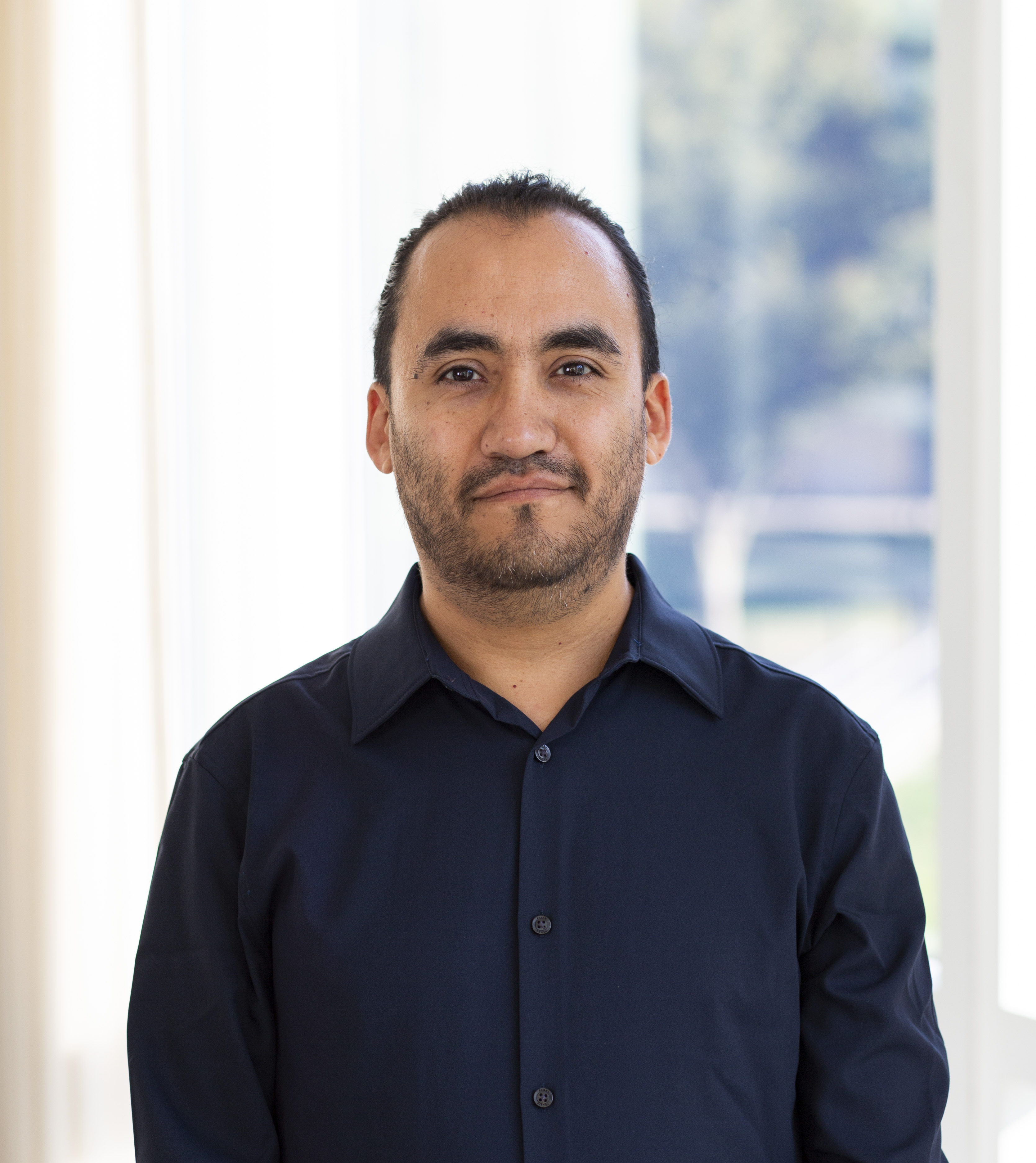
Welcome to my corner of the web. Here, I share my research, projects, academic journey, and thoughts on physics and computing.
I am an Experimental Particle Physicist and Research Physicist at Carnegie Mellon University, conducting research with the CMS Experiment at CERN and serving as a Fermilab LPC Distinguished Researcher. My work sits at the intersection of collider physics, machine learning, and reproducible scientific computing.
My research addresses a central open question in particle physics: the shape of the Higgs potential, which governs electroweak symmetry breaking and can only be measured directly through Higgs boson pair production ($HH$). In multi-$b$ hadronic final states, progress is limited not by collision luminosity, but by our ability to model complex QCD and heavy-flavour backgrounds where simulations fall short. I develop machine learning methods to estimate these backgrounds directly from collision data and rigorously validate their uncertainties using synthetic datasets. Beyond di-Higgs, I lead the inclusive $t\bar{t}H(b\bar{b})$ analysis to demonstrate that this data-driven framework generalizes across diverse multijet and top-quark background regimes.
To support this high-throughput program, I architect declarative workflows (Snakemake) and continuous integration pipelines that execute across heterogeneous clusters (HTCondor, Slurm, Kubernetes). These workflows are specifically engineered to provide the deterministic guardrails required for agentic AI—allowing autonomous AI agents to code, test, and execute analysis pipelines while automated regression checks enforce reproducibility and scientific validity. Having served as convener for the CMS Workflow Orchestration and Analysis Preservation group, I actively lead efforts to establish verifiable computing frameworks as our field integrates AI-driven workflows.
Research Interests
- High Energy Physics
- di-Higgs Physics
- ttH(bb) Physics
- Machine Learning
- Workflow Orchestration
- Open Data
- Analysis Reproducibility